


Beer has been a staple beverage across cultures for thousands of years, but it wasn’t until 1935 that beer cans entered the market. Today, canned beer is not only widely consumed but also preferred in many modern drinking environments — from outdoor events to retail shelves.
With the rise of craft brewing and increasing demand for convenience and sustainability, beer canning lines have evolved into highly automated, intelligent systems. This article provides a comprehensive overview of the beer canning process, focusing on the key steps, equipment selection, packaging options, and future trends relevant to breweries and liquid filling machine manufacturers.

Key Process Steps in a Beer Canning Line
Step 1: Empty Can Infeed & Depalletizing
The process begins with stacks of empty aluminum cans arriving at the production line. Depending on the scale and automation level:
- Fully automatic lines use depalletizers to remove cans from pallets and feed them onto the conveyor.
- Semi-automatic lines require manual loading by operators.
This stage ensures a steady supply of clean, undamaged cans ready for processing.
Step 2: Internal Rinsing & Sanitization
Before filling, all cans must be thoroughly cleaned to eliminate dust, debris, or residual moisture.
- A twist rinser flips each can upside down, rinses the interior with sanitizing water or steam, and returns it upright.
- Some advanced systems integrate UV sterilization to enhance hygiene standards.
This step is critical to food safety and product consistency.
Step 3: Oxygen Purging with CO₂/N₂
Oxygen exposure can lead to oxidation, which negatively affects beer taste and shelf life.
- Before filling, CO₂ or nitrogen gas is injected into each can to displace oxygen.
- This inert gas blanket protects the beer during and after the filling process.
Gas flow and concentration are often monitored and controlled automatically.
Step 4: Precision Filling
Filling is one of the most crucial stages in the canning line, and it is performed using a dedicated beer can filling machine.
- Multi-head filling machines ensure high throughput and accuracy.
- Teflon-coated nozzles prevent contamination and dripping.
- Liquid levels are precisely controlled using sensors or gravimetric systems.
Common can sizes include:
- 12oz standard
- 12oz slim (sleek)
- 16oz tall
High-end systems offer ±1% filling accuracy and support quick changeovers between can types.
Step 5: Lid Feeding & Pre-Sealing
Metal lids (ends) are automatically fed from a hopper and placed on top of filled cans.
- Optional features include nitrogen spiking, where a final burst of gas is introduced before sealing.
- Vision systems may verify lid presence and alignment before moving to the next step.
Step 6: Double Seaming Process
Seaming ensures a hermetic seal between the can body and lid.
- A can seamer uses two rotating rollers to crimp the lid onto the can body in two stages.
- The resulting double seam is leak-proof and strong enough for transport.
Quality control systems monitor seam integrity using pressure tests or visual inspection.
Step 7: External Cleaning & Drying
Spillage during filling can leave residue on the outside of the cans.
- An external rinse system cleans the surface.
- A blow-off tunnel dries the cans using compressed air, preparing them for labeling.
This step prevents sticky surfaces that could interfere with downstream processes.
Step 8: Quality Inspection & Rejection
Automated inspection systems check for:
- Underfilled cans (low fills)
- Improperly sealed cans
- Misaligned labels or incorrect coding
Defective units are automatically rejected from the line, ensuring only perfect cans proceed.
Step 9: Labeling & Coding
Labeling adds branding and essential information such as:
- Batch number
- Expiry date
- QR codes
Two common labeling methods:
- Pressure-sensitive labels: Applied using wrap labelers
- Shrink sleeve labels: Heat-shrunk around the can for full coverage
Labeling systems are designed to handle high speeds while maintaining accuracy.
Step 10: Final Packaging & Palletizing
Once labeled, cans are packaged for distribution.
Options include:
- Plastic rings for 4/6/8 packs
- PakTech carriers – reusable plastic handles
- Cardboard boxes for larger packs (12–36 cans)
- Case trays (flats) for bulk shipping
Automatic packaging systems increase efficiency and reduce labor costs.
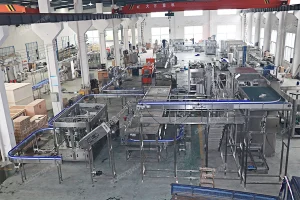
Equipment Selection for Different Brewery Types
| Brewery Type | Production Scale | Recommended Configuration |
|---|---|---|
| Large Industrial Breweries | High-volume, standardized | Fully automated lines with MES integration |
| Craft Breweries | Small-batch, multi-variety | Flexible mid-speed lines with quick-change features |
| Contract Packers | Multi-client, multi-brand | Modular systems supporting multiple can types |
| Startups/New Brands | Budget-constrained | Compact, scalable systems |
Choosing the right equipment depends on production volume, budget, and flexibility needs.
Can vs Bottle Packaging Comparison
| Feature | Can | Bottle |
|---|---|---|
| Weight | Lighter | Heavier |
| Breakage Risk | Very low | High |
| Light Protection | Excellent | Poor (unless brown glass used) |
| Recyclability | High (aluminum is infinitely recyclable) | High (glass recycling well-established) |
| Refillability | No | Yes (for returnable bottles) |
| Equipment Needs | Requires can-specific filling & seaming | Requires bottle washing & sterilization |
Both formats have advantages, but cans are increasingly favored for modern, on-the-go consumers.
Future Trends in Canning Technology
As consumer expectations and environmental regulations evolve, so too do canning technologies:
- Smart Control Systems: Integration of PLC, HMI, and IoT for remote monitoring and diagnostics.
- Green Manufacturing: Energy-efficient motors, water-saving systems, and carbon footprint reduction.
- Flexible Production: Quick format changeovers to support small batches and custom packaging.
- AI-Powered Vision Systems: Real-time quality checks and anomaly detection.
- Sustainable Materials: Use of recycled aluminum and biodegradable packaging materials.
These innovations help breweries stay competitive while meeting global sustainability goals.
Conclusion
Beer canning is more than just a packaging method — it’s a critical part of the production chain that impacts product quality, operational efficiency, and brand reputation.
Modern canning lines combine precision engineering with smart automation to deliver consistent, high-quality results. Whether you’re running a large industrial brewery or a small craft operation, choosing the right canning equipment can make all the difference.
At Datong Manchine, we specialize in designing and manufacturing intelligent, efficient, and future-ready canning solutions tailored to your unique production needs. From concept to delivery, our team supports you every step of the way.