


In today’s competitive beverage market, packaging design plays a critical role in attracting consumers and building brand recognition. However, packaging design is not only about creative graphics or bottle shapes. It is also closely linked to how efficiently and accurately those designs can be applied in real production. This is where labeling machines become a key factor. A well-chosen labeling machine directly influences packaging appearance, production stability, and brand consistency.
To better understand this relationship, it is important to look at how labeling technology shapes beverage packaging design from both a technical and practical perspective.
Why Labeling Is a Core Part of Beverage Packaging Design
To begin with, labeling is one of the most visible elements of beverage packaging. It carries essential information such as brand identity, product name, ingredients, nutrition facts, and regulatory details. More importantly, the label is often the first thing consumers notice on a shelf.
From a design standpoint, packaging concepts must consider how labels will be applied during production. If a design cannot be labeled accurately and consistently, it becomes difficult to maintain quality at scale. Therefore, labeling is not a final step added after design, but a core part of beverage packaging design planning.
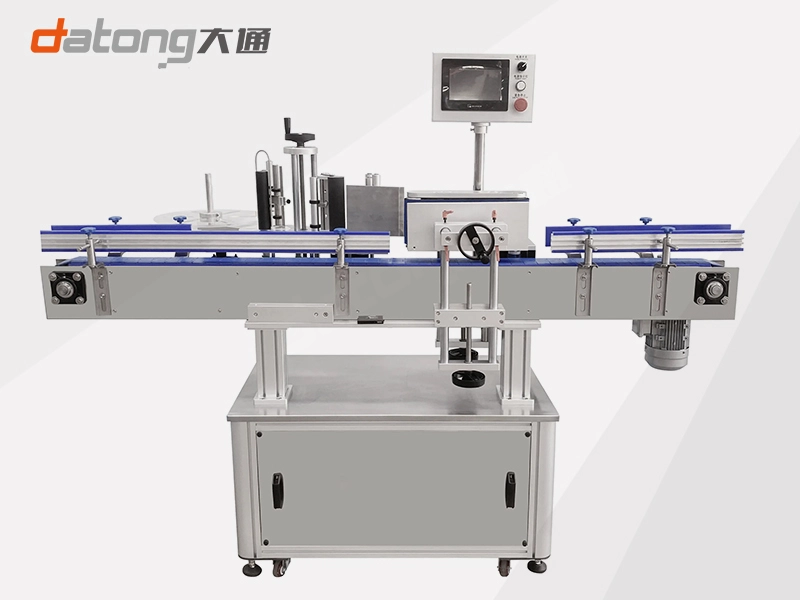
Limitations of Manual on Packaging Design
Before automation became common, many beverage producers relied on hand labeling. However, manual labeling places clear limits on packaging design and production efficiency.
First, manual labeling makes it difficult to support complex designs. Labels may be applied unevenly, leading to crooked placement, wrinkles, or air bubbles. These issues reduce the visual appeal of the product and weaken brand image.
Second, consistency is hard to achieve with manual work. Even skilled workers cannot apply labels in exactly the same position every time. As production volume increases, this inconsistency becomes more noticeable and affects shelf presentation.
Finally, manual labeling often slows down production and disrupts workflow. When labeling becomes a bottleneck, packaging designs must be simplified to keep up with output demands. As a result, creative packaging ideas are often sacrificed for practicality.
How Automated Labeling Machines Enable Modern Packaging Design
With these challenges in mind, automated labeling machines have become essential in modern beverage packaging. Rather than limiting design, they support and enhance it.
Precision Labeling and Visual Consistency
First of all, automated labeling machines are designed to apply labels with high precision. Each label is placed in the correct position with consistent alignment and tension. This precision ensures that packaging designs look clean, professional, and uniform across every bottle.
As a result, brands can confidently use detailed graphics, fine text, and premium finishes without worrying about misalignment. This level of consistency is especially important for beverage brands that rely on strong shelf impact.
Supporting Different Bottle Shapes and Materials
In addition, modern beverage packaging often uses lightweight PET bottles, glass bottles, or uniquely shaped containers. Automated beverage labeling machines can adapt to these variations much better than manual processes.
By handling round, square, or irregular bottle shapes, labeling machines allow designers more freedom. Packaging teams can explore new bottle designs while maintaining stable labeling performance during production.
Shrink Sleeve Labeling Machines and Design Innovation
Among different labeling solutions, shrink sleeve labeling machines have had a major influence on beverage packaging design.
360-Degree Branding Possibilities
Unlike traditional labels, shrink sleeve labels cover the entire bottle surface. This allows designers to create 360-degree graphics that fully wrap around the container. For beverages competing in crowded retail environments, this full-body branding significantly improves shelf visibility.
Because shrink sleeves conform to the bottle shape after heat application, they work well with contoured or non-standard bottles. This makes shrink sleeve labeling machines a popular choice for innovative beverage packaging.
Flexibility for Marketing and Product Updates
Another advantage is flexibility. Shrink sleeve labeling supports quick design changes for seasonal promotions, limited editions, or regional packaging. Since the bottle itself does not need to change, brands can update their look without redesigning containers.
From a production standpoint, this flexibility is only practical when supported by a reliable shrink sleeve labeling machine that can handle fast changeovers and stable operation.
Labeling Machines and Production Efficiency from a Design Perspective
While efficiency is often discussed in terms of speed and cost, it also plays a role in packaging design.
High-speed labeling machines make it possible to apply complex designs at scale. Without automation, detailed packaging may work in small batches but fail in mass production. Automated labeling ensures that creative designs remain practical as output increases.
Moreover, stable machine performance reduces interruptions and rework. When labeling is consistent, designers and production teams can focus on improving packaging appearance rather than fixing application problems.

Quality, Compliance, and Brand Integrity in Beverage Packaging
Beyond appearance, labeling machines also support quality and compliance. Beverage packaging must meet strict regulatory requirements regarding label content and placement. Information such as ingredients, expiration dates, and barcodes must be clear and readable.
Automated labeling machines help ensure that labels are applied correctly every time, reducing the risk of missing or unreadable information. This consistency supports regulatory compliance and protects the brand from potential recalls or market issues.
At the same time, consistent labeling reinforces brand integrity. When every product looks the same, consumers develop trust in the brand. Over time, this reliability becomes a competitive advantage.
Choosing the Right Labeling Machine for Beverage Packaging Design
Given these factors, selecting the right labeling machine is an important decision. Beverage producers should consider bottle shape, label type, production capacity, and future design plans.
For standard round bottles, pressure-sensitive labeling machines may be sufficient. For more creative designs or full-body graphics, a shrink sleeve labeling machine may be the better option. In all cases, working with an experienced labeling machine manufacturer helps ensure the equipment matches both design goals and production needs.
Conclusion: Labeling Machines as a Design Enabler
In summary, labeling machines are far more than simple production tools. They directly influence beverage packaging design, from visual quality and brand presentation to flexibility and compliance. Without the right labeling solution, even the best packaging design may fail during production.
By investing in suitable labeling technology, beverage producers can protect their design investment, improve production stability, and strengthen their market presence.
Datong is an experienced labeling machine manufacturer providing reliable beverage labeling solutions, including advanced shrink sleeve labeling machines and complete packaging systems. With a focus on performance, consistency, and practical application, Datong supports beverage brands in turning packaging designs into successful products.
Contact Datong today to learn how a professional labeling machine manufacturer can support your beverage packaging design and production needs.